Showing posts with label environment. Show all posts

Tuesday, January 20, 2009

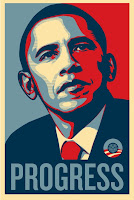
A great weight (both standard and metric) has been lifted


Hopefully a house cleaning will be undertaken in the U.S. government, getting rid of all (or at least most? Please?) of the ignorantly-idealistic, ill-suited, armchair commando, activist neo-cons who can't differentiate fact from fantasy. Well, hopefully the last eight years will show that their unsuited experiments of fantasy won't -- and didn't -- work. Their small ideas were once untested, but have now been tested - and their follies have been found to be greatly lacking and foolhardy. People so grossly unqualified should not be in charge of anything, much less a post that requires (demands!) intelligence and a comprehension of science.

I call on President Obama to change the course of America's future, and to do what's right for the people of this great country, and the world. Not for what's good for CEOs' annual bonuses, or for the middle-management of self-serving companies that would do harm to American (or world) citizens so that they can be lazy and save a few dollars and assure their stockholders of a profit the next quarter. But for all the others of us out there who will reap the harm caused by them currently and in the future. Because I really don't want three-eyed, one armed, flipper-footed, grossly overweight grandkids.

Tuesday, May 20, 2008

Soylent Green, the sequel?

Yikes... instead of eliminating or bypassing CAFOs and the associated animal suffering, environmentally-hazardous waste disposal, overuse and misuse of antibiotics, and etc., by raising humanely-raised livestock on small family farms, some people seem to want to go the other way: to growing meat in a laboratory. I can't think of anything more repungnant, except maybe eating Soylent Green (which actually, and scarily, isn't all that different according to what happens in the movie, minus the human element as raw material, of course).

Read these articles and decide for yourself:

Will Lab-Grown Meat Save the Planet?

Tastes Like Chicken: Growing meat without growing animals

Sunday, May 18, 2008

Farmers, consumers, and organic food

I also came across two articles online regarding farmers, consumers, and organic food.

The first article, Natural Response: As prices of organic foods rise, plain old fruits and vegetables suddenly look better, shows not only the fickleness and apathy of the average consumer, but also that when it comes down to it, many (if not most) farmers want to make money over doing what is right for the consumer and the environment.

However, as I feel organic foodstuffs are overrated in many ways anyway, I'm glad to see that locally-produced foodstuffs are being preferred by consumers as they tend to be cheaper (mainly due to almost zero transportation costs) and fresher (and may be organic anyway, or perhaps even "beyond organic"). The second article, Shoppers Choosing Local Over Organics in Produce, addresses this issue/these issues.

One interesting statement from the second article is that "33 percent [of consumers] are concerned about the safety of organic produce." Is it because USDA organic standards have been lowered in many categories and also been manipulated by producers, or is it due to anti-organic propaganda like when organic spinach was blamed for the E. coli outbreak in late 2006, when in fact it was conventional bagged spinach?

Natural selection

I came across this article in a local newspaper: Drought takes toll on Leyland cypress trees. I had to smile while reading it, as I despise the tree, and feel that it symbolizes all that is wrong with mediocre (design-wise) and unsympathetic (to their environment/s) housing and landscaping.

The tree is apparently drought-sensitive, and Robert Jackson, a professor of global environmental change and biology at Duke University's Nicholas School of the Environment, speculated that "a fungal disease may have contributed to the death of the trees," and that "extreme temperatures and drought can weaken trees, making them more susceptible to pathogens."

A landscape architect and urban forester at the Chapel Hill Public Works Department "recommended that landowners instead plant the Eastern red cedar, a native tree that looks like the Leyland cyprus but is hardier." So, it turns out that a native tree is replacing a tree that is unsuitable for the local climate... imagine that.